Saturday, December 23, 2006

Future Instruments -- Part II

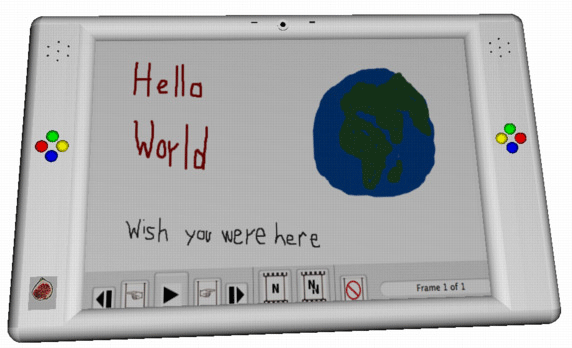
Maybe the future of instruments is edit mode and the future of edit mode is a control panel/dashboard.

Interviewers -- generally middle-aged women and men -- would learn to play Ender's Game.

Of course (or perhaps) this is my fantasy. So in our cold, cruel world ("we live in a time where meaning falls and splinters from our lives") what might the dashboard be like?

Read More...

Thursday, December 21, 2006

Future Instruments -- Part I

Just saw the article in Amstat International's newsletter on the situation at Statistics Netherlands.

Does one think that the shift to registers and administrative files as the primary data source is a phenomenon unique to the Netherlands?

Let's say it is not and see what happens (a thought experiment).

Let's say that the use of data banks in both establishment and household surveys becomes a requirement in the US too.

At the same time, as the article suggests, there may be "initiatives for new statistics". I would also add that with this data source, as with any other, there will also be missing data.

What kind of "instrument" is required to build the record under these circumstances?

It would be an instrument that largely filled in the gaps or, as people in the market research world might says, it would be an instrument that filled in white spaces in the single source of truth.

I try to imagine such an instrument.

Could we get by using the current paradigm which in this case would be a preload of the registers and an instrument that knew how to jump from one white space to another without interviewer intervention.

Would we not want to know before a survey went to a mode whether it was going to take five minutes or five hours depending on the missing data?

Would an interview that jumps between white spaces trash the context in which questions are normally asked?

Alternatively, if the context was preserved and an interview walked instead of jumped, wouldn't the cost of data points become prohibitive and the interview come to be seen as flat-footed?

Read More...

Monday, October 23, 2006

The topography of XML

Which are the stuff of dreams -- XML documents or relational databases?

Freud might say that a relational database is polymorphous perverse. That's because through the miracle of foreign keys the same table can have many parents. Imagine that.

Actually it is hard to imagine the life of rows because they can appear in many places at once. That is, the same row might be involved in several relationships. Are you getting the perversity of all this?

In XML, elements have elements, and elements have attributes.

I can hear the train of thought now. XML is hierarchical whereas in a relational database there are more degrees of freedom.

Freedom and perversity.

When have I heard this story before.

Is XML then the representation of conservatives?

Am I a conservative who chooses XML?

And do relational database administrators really have a proclivity to sleep around?

Tune in next week for an entirely new episode of "XML Matters" only on Wolf TV...

Actually there are two things you have to know about the flavor of hierarchy that comes in XML. They are cardinality and order.

Cardinality is about the number of elements. Order is about their position. The calculus -- say integration -- uses number and order to make sequence. Sequence is like the card deck our ancestors once flipped to produce animation. Sequence is a movie. Sequence is visualization.


I'd like to see a relational database put sequence in its pipe and smoke it. It is not possible according to Codd and Date who are two really big relational database fish.

On the other hand, shaping, shapes, movement and maybe, as we shall see, even morphing and cloning are second nature with XML.

Finegan. Begin again.

Did you know that Finegan's Wake is an XML document?

Read More...

Sunday, October 22, 2006

The faces of a solution

How does one traverse the solution space when it comes to building a platform for data collection/data dissemination?


How does one go about "surfacing" a solution?

How many surfaces does a solution have?

What is the connection of these surfaces?

Is there a glide that takes us from surface to surface?

Do we follow that glide and construct a family of surfaces? Or do surfaces fall away as new surfaces pop us, kind of like a comet?

Maybe in the one case -- call it the product line model -- we are building a house. Maybe in the other case -- call it the comet model -- we are building momentum.

Everything is legacy after the first moment.

Comets solve the problem of legacy and over-extension which creates white elephants or, again, too much baggage with a vanishing tail.

In the comet model every surface has a sunset. The sunset is when noone comes to the surface and sticks to it like flies. That's when the surface goes into the tail of the comet and dies.

Fly. Die.

In any event what fuels a surface surfacing and any story a set of surfaces make are engines.

I want to talk about engines before hell freezes over.

Maybe we will talk if there is a tomorrow.

Read More...

Saturday, October 21, 2006

What's in a "placeholder"?

Recently in the context of an agile design session I called some software we are about to add to our platform a "placeholder".

The context also contained a reference to "see emily run". This goes back to Syd Barrett's "See Emily Play." The Emily I meant was Emily Chang, Strategic Designer, and my "see emily run" was a a reference to keywords Emily ran in her run-lola-run post Design 2.0: Minimalism, Transparency, and You.

So what's a placeholder?

It's probably another word for an iteration.

Usually (in agile circles) we think of iterations as steps on the way to a product.

What if we don't know what a product can become but at the same time there is a business REALITY an in "I want the world and I want it now" (The Doors).

Maybe I am stupid not to know what this product can become. But if you are in the business of data collection and data dissemination (who isn't?) and you think you know how this is going to work five years out, you are a fool.

That's why I talk about placeholders.

Read More...