"i come from the web..."

Technorati Tags: hidden in plain view, identity 2.0

Not everyone saw Zebra's stripes.
Some of her blog entries were open to the public.
Other entries -- they were the dark side of Zebra -- were locked down. Only friends could enter.
One of Zebra's friends was Pi. Another was Bear.
She wrote for their eyes only.
Hidden in plain view Pi and Bear saw black as they read the following:
Have you ever been haunted by an angelI will try to write more about Zebra and Pi and Bear in the coming days. Zebra and Pi are dead now.
who sings songs of the night in your head
you know he is warm and gentle
but his face is frighteningly dead
today he be the shooter
tomorrow he be the shot
he try to be a girl but that may be one nick he not
you got a knack for nicks, someone he befriended last week said to him
the someone is kim
kim see me shed
kim figured me to be the same person
he said you can always tell an old persona from a new one
because in the space of three away when an old profile goes and a new one comes, conservation is the rule, according to kim
conservation is the conservation of identity
the space of three away is friendster space
myspace is different
in myspace there is no end to friends
kim he be an analyst he write a screen scraper that breaks the chain of friends by removing the collectors and the fakesters and the myspace whores and all the public displays of connection
what he got left is three away
three away is not myspace anymore
kim calls three away true life
he watch me in true life
and see me shedding
The vocabulary here comes from the ear of danah boyd figuratively speaking. It's a good ear in my estimation -- one worth being sampled.
More specifically, I picked up many of my words from Friends, friendsters and top 8: writing community into being on social network sites. This essay appeared in the December 2006 edition of First Monday.
I also listen at the source. The source is See me, touch me, feel me, heal me. "See me, touch me, feel me, heal me" is a call from MySpace. This call was first made by The Who.
Technorati Tags: Friendster, MySpace, nick

I just discovered danah boyd.
Slow is me.
What does one say about the body of her thought?
Connected.
Unnerving.
The wire flows through her.
She has the right ear.
And probably a left ear too, judging from pictures.
One thing I am pondering that she writes about is multiple personas.
People with multiple personas are change artists.
Change artists are like graffiti artists only they've got tools and they paint on many canvasses sometimes at once and sometimes in a series.
I want to follow in the foot steps of a young change artist.
I also want to know how change artists will shape the future of identity services like OpenID and CardSpace which already provide some support for a digital identity composed of multiple personas.
Technorati Tags: CardSpace, danah boyd, OpenID
 I am in another study now.
Some time has passed.
Tick, tick is the sound of time elapsing. I like the sound of "elapse".
The new study is my Health Diary. It goes on for two years.
It is in the Health Diary that I found out that The Traveler isn't lying: there is a Vast Machine.
That's because the Health Diary is not a blank slate. Each day I log in it knows stuff that has happened the day before if I was sick.
When I am well my ToDo List is empty. If I have been sick my ToDo List may know a great deal.
It knows if I have been to the pharmacy.
It knows if I went to the doctor or an emergency room.
It even knows when I go to the dentist.
Is that familiar or what? Shades of Santa:
He know when you are sleepingMaybe instead of elves working for Santa, it was the Vast Machine.
He knows when you're awake
He knows if you've been good or bad
So be good for goodness sake!!!
 I just started a food diary on my N800. I love my N800... The food diary is what you call interactive. Interactive indeed.
It starts with an on-line calendar and the N800.
The way it works is that I go on-line to my food diary while I am eating. I seem always to be able to go on-line because of mobile broadband. I love mobile broadband.
My food diary opens to the current day and waits for me. That my cue to, using the N800, take pictures of my meal. I won't show you all my meals for thirty days because I don't eat well. I know another SP though who went to Japan.
 Maybe by now you have looked at the diary and saw the comments. The comments come from friends. My diary has a rolodex, and I add a card for each friend. Only my friends can make comments. That's a good thing.
 In addition to the friendly fire, from time to time other comments will appear. The other comments take the form of Digital PostIts. Someone sticks one on top of a picture, and I reply.
Whoever said that a picture was worth a thousand word never met my nutritionist.
I call her a nutritionist and I call her a her. We have never met. I have only seen her avatar when we IM (instant message) from time to time.
She calls the PostIts food probes. They happen. Not every meal. Just sometimes. I don't really mind either because I've got probes.
Technorati Tags: mobile broadband, N800
 A community that is based on random sampling is unusual to say the least.
DadaSP is cool because on the list of my surroundings I see locals and travelers.
Locals are people from the current PSU. PSU is short for Primary Sampling Unit. Travelers are people in the current PSU who come from other PSUs.
Sometimes I am a local and sometimes I am a traveler.
When I am a traveler sometimes I will ask the help of locals -- like to find the best restaurant or the location of a street if I am lost. That happens alot.
I won't ask just any local though. That isn't permitted. Instead locals can volunteer to become Harlequins. And Harlequins protect travelers.
At DadaSP I will pick a Harlequin based on reputation. The reputation of a Harlequin comes from previous encounters.
So DadaSP is a service -- definitely a perk for people who are members of the random sample.
There is something else. We get default personas.
A persona is what the other people in the community see of me virtually. See of me virtually... That is a mouthful.
Noone can change their default persona.
It's like Halloween every day of the year.
At the same time, based on usage, DadaSP will construct one or more additional personas at my direction.
Moi. Me. Me directing my own Identity. It's a bird. It's a plane. No. It's Identity 2.0.
I say the number of additional personas I want. Then DadaSP comes up with candidate interests based on the analysis of my usage. Then I get to accept or reject these interests into each persona via a text message that comes at the end of each day. I've got interests.
At any time when someone is helping me or if I am a Harlequin too, I get to pick my persona.
I pick a persona and people see its avatar and a cloud.
At DadaSP the cloud is the cloud of my interests. Each interest is a label and my labels are organized serendipitously. My main interests appear in large fonts. Lesser interests appear in little fonts.
Click on an interest -- say "science fiction" -- and you get a standard result set. The cloud is operated by Quintura. I have blogged Quintura before.
Technorati Tags: Dada, DodgeBall, Identity 2.0, imaginary friend, random sample
I just got my N800. I call her Naughty.
I got Naughty from the company because I am a sampled person.
When they first told me I was a sampled person the announcement came in a text message.
I never used to read text messages from unknown senders before. Except now senders have reputations that my spam filter sniffs. Sometimes a text message fails the filter. That's when the ring tone tells me that I've got incoming nasties.
My filter zaps the nasties. My filter blows nasties to bits. Pow! Nasties makes my day.
The text message said I would get the N800 if I agreed to have an imaginary friend. It said the N800 (today I call her Naughty) had personality, talked a blue stream and was very interested in my opinions. The text message also gave me a link to DadaSP. At DadaSP I would meet and get the scoop on this imaginary friend stuff from other sampled persons who were within walking distance right now. Shades of DodgeBall.
The people at DadaSP were a strange mix. But that is by design. Because we are a random sample.
Technorati Tags: Dada, DodgeBall, imaginary friend, random sample
What is a data silo that tilts? A tube.
What happens when two of these tubes meet? They exchange.
If Don Quixote could see us now, he might become an early adopter. An early adopter of what? Tubes R Us! Fast forward to a future with Tubes:
They met in the tubes.
She hosed him with her content.
He hosed her back.
Ting-lan was thoughtful.
She had solved a problem sideways the way mathematicians go at it sometimes.
The problem had been to match answers that had no questions to questions that had no answers.
Ting-lan smiled. Papa had been no good. If Mama could see her now. She was about to wonder twice but decided this was not the time for Ting-lan Tao. By Ting-lan Tao Ting-lan meant the reverie.
Ting-lan's solution came from Dirt. Dirt is an online celebrity gossip magazine where fans can submit audio comments to podcasts and spill their beans. Not mung beans but all kinds of confession beans. Tittle beans. Tattle beans. Audio beans.
Dirt is powered by Big In Japan. Big In Japan has an ethos for developers. Ting-lan followed the ethos.
In this ethos Ting-lan became a "social samurai". A social samurai would not dream of clustering answers and questions through their feature values without user input.
In Ting-lan's solution a user/interviewer enters the bestmatch algorithm via The Door and becomes part of the program. Ting-lan built The Door using parts from Big In Japan.
There was a movie once where users entered programs -- Tron. Ting-lan's solution was Tron for interviewers.
Who said survey research wasn't cool? Cooler than Google? Yes, Ting-lan thought, Google is boring.
Google is boring. Quintura is not.
I enter "self-organizing map". Along with the usual result set, I get a cloud. In the cloud I see my keyword along with other ones sized according to their frequency.

If I want to add a keyword to the cloud that is not already there, I just double click:

Now my result set is the product of the two keywords. Pretty cool! It gets better. I hover on "cluster analysis" and preview its keywords:
Finally, I select "cluster analysis". And I get a new cloud and a new result set. They are the products of "self-organizing map" and "cluster analysis":

Not bad. Better than not bad. Not boring...
In a recent post at Read/WriteWeb Alex Iskold wrote otherwise at The Race to Beat Google. He was somewhat dismissive of the clustering solutions saying they were too complex to make it in the mainstream. I don't think we want to underestimate clustering when it is wedded with clouds. Indeed clouds informed by clustering like the ones above can rain on Google's parade. I hear from kids that they always wanted clouds to do the walking. Imagine a swim in clouds that have three dimensions. Instead of "googling", the euphemism will be "I need to check the weather." The rejoinder from Will Smith's wife in Enemy of the State would be: "And just whose weather are you checking?"
Velvet was having a tangerine day. On a tangerine day every interview she touched would flow and glow and she was reminded of that song by Talking Heads which right now she couldn't stop hearing even if she wanted to:
I dont know why I love you like I do
All the troubles you put me through
Sixteen candles there on my wall
And here am I the biggest fool of them all
I wanna know that youll tell me
I love to stay
Take me to the river and drop me in the water
Dip me in the river, drop me in the water
Washing me down, washing me down.
Generally speaking, interviewers aren't told alot by the company. They say that is so the interviewer won't be a source of bias -- something about interviewers shaping respondents subliminally.
Like if I were to wink my eye at the respondent here and there.
It might fill her head with ideas. I hope noone is reading this -- least of all the wife.
In any event Carl had cornered a statistician on the bus where he proceeded to impersonate a programmer and the two of them kicked around the nearest neighbor hotdeck method. This was how an interview that was refused got its data.
The technical term for this is imputation.
It turns out imputation is cool except when you are collecting longitudinal data. This is when your heartaches begin.
With longitudinal data it is possible to check hotdeck data against a previous interview from the real respondent.
Some people would have said to let sleeping dogs lie but curiosity got the better of the statistician, and now it is possible to wonder about imputed data.
Enter the heartache and the impersonator and the shaper and Carl. That's me.
Carl was feeling bigger every moment.
That's because active participation was impersonation guided by the shaper.
Carl, the impersonator, would get in the mindset of the respondent and answer questions that were flagged. He would answer the questions to the shaper's liking.
This could happen sooner or it could happen later.
You would think that a bot or semi-sentient like the shaper had all the time in the world. But she didn't. Indeed she went wobbly when the impersonator gave a good answer on the first try. And this made Carl blush.
On September 28, 2006 the US Patent Office published a patent application from Microsoft entitled System and method for improving search relevance.
The inventor contemplates the following problem:
Take a collection of documents, say about the size of the Web, and try to organize them based upon textual similarities between them. Can that organization provide a useful way to index the web?The invention would augment keyword search. Documents would not be indexed based on keywords directly. Instead there would be an indirection. Documents have labels -- many labels. Just look at how documents are labeled by a typical user of del.icio.us or one of its competitors. Keywords would be related to labels that are related to documents.
The Self-Organizing Map (SOM) by Kohonen is motivated by the receptive fields in the human brain. High dimensional data [e.g. labeled documents where each label is a dimension] are projected in a self organizing process onto a low dimensional grid [e.g. a system of keywords that Microsoft refers to as "content tiles" in the application] analogous to sensory input in a part of the brain.See the discussion of Emergent SOM at the website of the Databionics Research Group for a more in depth treatment of self-organizing maps including some nifty visualizations of the SOM process. See also my del.icio.us som.
A system and method for performing context based document searching is provided. A grid of content tiles is constructed corresponding to a desired concept space. Each content tile is assigned a content tag and is associated with a series of feature values. The feature values are trained to correspond to various regions of the content space. Documents are associated with one or more content tags based on a comparison of document feature values with content tile feature values. A search query is modified to include one or more content tags based on the terms in the search query and/or user preferences. The search query is then matched to documents associated with content tags contained in the search query.
Ting-lan wondered twice.
Would her way be vinegar or might she succeed with the many?
Generally speaking, the Americans were premature. They were premature this and premature that. Both of the sexes. Need she say more?
Ting-lan had left the pack for a few weeks now.
She was working on the usable data problem. External data had been a disappointment. Too many unanswered questions. Sometimes it was easier not to use the external data at all.
Ting-lan had the insight that would minimize the unanswered questions. She would use the off-colors. The off-colors were the very small data islands on her screen that could not be located in question space.
Ting-lan liked answers without questions. As a little girl this had always been her way.
At first Ting-lan has thought the clustering algorithm would be easy to devise. She would discover the drifts in the questions with answers and use the drifts to reel in the off-colors at random and with brute force.
Only the net she cast was too large.
Now Ting-lan was working with majors and minors. Semantics, she thought, was a dog's day afternoon.
Carl was impressed with active participation.
At first, when the concept had been presented at training, Carl had been sure that he had a personality that was averse to shaping.
Just ask the wife.
Now that he had been working with the shaper though, Carl was of a different mind.
Carl didn't think this was brain washing. He thought of it as collaboration. True the shaper was only semi-sentient and Web 2.0 had largely closed the door on the participation of other beings.
Indeed many hives actively challenged and tried to screen out the semi-sentients.
The company and now Carl obviously had second thoughts.
The record had to be set straight, Carl decided. So he made a mental note: when he had a little time, Carl would post the skinny on active participation.
 Velvet wasn't happy.
On the dashboard she was watching a picture develop that was nothing short of confusion.
The picture was an overlay -- a scattergram -- on top of a pipeline. The pipeline itself showed neighborhoods. Some of the neighborhoods were dark and some were light, depending on what happened after Velvet had dropped the external data sources.
External data sources made certain neighborhoods more or less light while leaving other neighborhoods in the dark.
Today this was not Velvet's problem.
Many dark neighborhoods in the overlay had been labelled "let sleeping dogs lie". The company would not pay her to ask the questions in these sections. Other neighborhoods that had only been partially illuminated as a result of the drop were now labeled "simulation candidates".
What was troubling Velvet were the neighborhoods marked "critical sections". These were empty sections that needed to be asked or not depending on the access roads. The trouble as Velvet looked at the scattergram was that it had waffled on the access roads.
Velvet, like most interviewers, wanted to see the access roads in black and white. Interviewers didn't have to enter a neighborhood connected to other neighborhoods on a black road. Being a person of color, Velvet wished the company had devised other color coding but she would muse on geek culture at another time.
Right now on the scattergram she saw dark neighborhoods labelled "critical sections" whose access roads were the color gray.
This could only mean back tracking. And back tracking always required a plan.
This had not always been the case. Before the advent of external data, interviews had been one way in and one way out for the most part. She wasn't sure why but external data sources had complicated this picture. In training they had simply told the interviewers that "now there is more than one way to skin a cat."
Velvet liked cats but she caught their drift.
On the dashboard Velvet flipped overlays to a plan called "the shortest distance between two points." This would be the plan that minimized back tracking which of course, Velvet thought, would have the side effect of maximizing the company's profits.
It didn't take Velvet more than a few pokes at this plan to decide it was high risk. Velvet's rule of thumb was to look at gate questions that would turn access roads to white coming from neighborhoods that were lit up by external data sources. In these situations Velvet judged whether the respondent would know the answer. Now Velvet chose a plan called "NoMax". Velvet wasn't sure what "NoMax" did. Velvet did know that "NoMax" did not maximize the use of data from external data sources. So much for double negatives.
Velvet looked at the scattergram once more and liked what she saw. Instead of lots of gray access roads, everything was coming up roses.
She counted four roses. Velvet knew that this was a borderline case that required authorization. Velvet also knew she was not about to be second guessed by central authority. That was why as she dragged the current pipeline she had just devised on top of the central authority resource, Velvet waited with easy confidence.
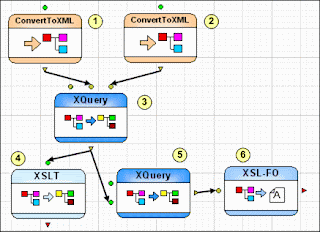

 Carl was about to begin a new interview. He knew the drill. He would snap and shoot the respondent and an avatar would appear in the resource pool. He then would drop and drag the avatar onto the pipeline and, after a pause, the questions would begin.
Only today there has been a refusal right after the snap and shoot. Perhaps it had been stage fright. In any event he wouldn't get to see the respondent's avatar first turn busy and then progress in hues from gray scale to whatever rgb his monitor was set at as the interview unfolded. Indeed something new occurred as Carl changed the avatar's status to "refusal". Carl had been trained for this eventuality but the eventuality had never happened before.
Carl checked the resource pool on the dashboard again. He had not been mistaken: a match had occurred. In a match the actual respondent avatar and a funny one were joined at the hip: a twin was born.
Carl remembered a Starbucks around the corner. It was no telling how long working the match would take.
Once in line Carl ordered a triple short mocha and after almost no wait, he sat alone at a table ready for the eventuality.
Carl dragged the match onto the pipeline hoping against hope that now his heartaches would begin. A heartache, Carl had learned in training, was when an interviewer had to join the match.
This wasn't normal. Generally matches, the product of advanced simulation, didn't require interviewer intervention. But Carl's company which had developed advanced simulation in the first place (patent pending), had also written the book on active participation.
Active participation was a training module. It was also an avatar in the resource pool. This avatar had Carl's face. Carl would use it if advanced simulation called on Carl to speak.
The trouble with advanced simulation, Carl had learned during training, was that sometimes a match gave answers that would fail the consistency check. There were two types of failures (called lies by experienced interviewers) that the match might be caught in. K failures had face validity. With F failures a match made a complete non-sequitor.
In either event Carl would get to say the answer.
Carl kicked back, dropped the match on the pipeline and watched the match do the walking. He did steal a glance at the resource pool and saw himself. Carl smiled at his reflection. It wasn't every interviewer who could say: I am in the house. This required specialization.

| |||||||||||||||||||||||||||||||||
|